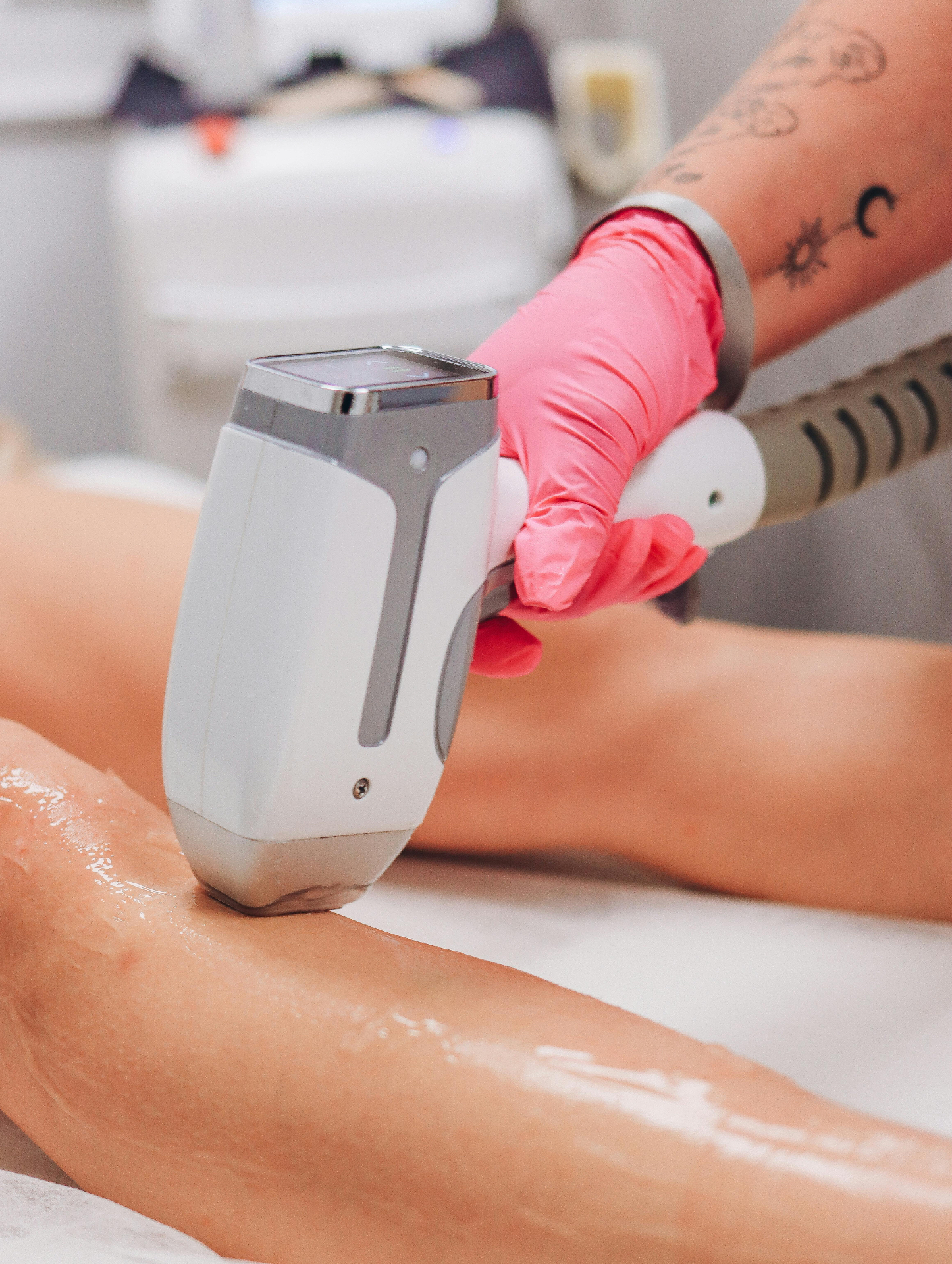
Some of the most careful messages I get are from women with darker skin. They've usually been burned once, or know someone who was, and they open with the same line. "I've been told laser doesn't work on skin like mine."
That used to be closer to true than it should have been. Older lasers were built for pale skin and dark hair, and they hurt people with deeper skin tones. Plenty of clinics still run that kind of machine.
So the honest answer to the title is this. It can be done well, and it can be done badly, and the difference is mostly the machine and the person using it. Here's what I'd want you to know before you book anywhere, including with us.
Why skin tone changes the whole picture
A laser finds hair by looking for pigment. It sends light into the skin, the dark hair absorbs it, and the heat damages the root. On pale skin with dark hair, that's easy. The skin barely absorbs anything, so all the energy goes where we want it.
Darker skin carries more pigment of its own. Some of the light gets caught in the skin instead of the hair, and that's where trouble starts. Too much energy in the wrong place can cause burns and blisters, or patches that go lighter or darker for weeks or months.
Skin types are often described on a scale from one to six, called the Fitzpatrick scale, with six being the deepest. Types five and six are the ones that need the most care, though the scale is only a rough guide. Two people with similar skin can react quite differently, which is one reason I don't trust a one size protocol.
None of this means laser is off the table. It means the setup matters more than usual.
The wavelength is the thing to ask about
If you take one question to a consultation, make it this. "Which wavelengths does your machine use?"
Different wavelengths travel into the skin in different ways. The longer ones, around 1064 nanometres, pass through the pigment in the top layer of skin and reach the root of the hair underneath. That's why the longest wavelength is the one used for the deepest skin tones.
Many clinics own a single machine with one wavelength. Some of those are fine for lighter skin and risky for darker skin. A clinic that only has one tool will try to use it on everybody, because that's all it has.
Ours is a diode laser that combines four wavelengths, 755, 808, 940 and 1064 nanometres, and it's designed to cover skin types one to six. I choose the wavelength to suit your skin and your hair, rather than your skin being fitted to the machine. For deeper skin tones that usually means the longer wavelengths and gentler settings.
And a quick warning. IPL, the flashing light devices used by many salons, is not a laser. It's a broad spectrum light, and it isn't a good fit for darker skin.
What a careful first visit looks like
We start with a conversation, not a treatment. I look at your skin tone and your hair, ask about your medication and how much sun you get. I also want to know what you've used on the area, and what you're hoping for.
Then comes the patch test, and I don't skip it for anyone. We treat a very small area at the settings we think suit you. Then we wait. At least a day, usually two, to see how your skin responds. Only after that do we plan a first full session. It's free at Astrabody.
It does mean your first session is a little further away than you'd like. I'd still ask for it anywhere.
One small thing that helps. Come with the area as it normally is, shaved the night before if you can, and tell me about any sun you've had in the last few weeks, even a lazy afternoon in the garden. A faint tan is easy to miss in a mirror, and it's far better that I hear about it from you than find out from your skin. If a clinic offers to treat your whole leg on day one without a test, I'd walk away.
At the first full session, we start low and build up. The settings go up gradually, session by session, as your skin shows us how it copes.
Why it takes a little longer
I should be straight about this, because it's the part people find frustrating. On darker skin we work at gentler settings so the skin stays protected. Gentler settings mean slower progress, and that can mean a couple more sessions than someone with pale skin would need.
At our studio the standard course is six sessions, at least four weeks apart. On deeper skin tones I'd tell you to plan for a few more than that, and I'll give you a realistic range after the patch test. I'd always choose a longer course with healthy skin over a quick one that leaves marks.
The hair also matters. Dark, coarse hair responds best. Fine, light hair is harder for any laser, because there's less pigment to find. That's true whatever your skin tone, but combined with deeper skin it's worth knowing early.
What can go wrong
There are risks, and I won't pretend otherwise. The ones to know about are redness, which most people get and which usually settles within a day or two, and temporary colour changes in the skin, either darker or lighter. These are more likely on deeper skin tones, which is why we're so careful. Burns are rare when the settings are right and the person using the machine is trained, but they do happen elsewhere.
Most of the protection is in the preparation. For two weeks before a session, keep the area out of the sun, and don't use sunbeds or fake tan. A tan, even a light one, changes how the laser behaves, and it's the thing most likely to cause problems.
Afterwards, wear SPF 30 or higher on that area every day for three weeks. Skip hot baths and saunas for a day or two, and go gently with exercise. Don't wax or pluck between sessions, because the laser needs the root to be there.
If something looks wrong afterwards, a blister or a patch that's changing colour, message me. Don't wait to see if it settles. Catching it early makes a real difference.
So can it be done well?
It can, with the right machine and a practitioner who's careful with you. Ask about the wavelengths, ask for a patch test, and be wary of anyone who's vague on either.
If you'd like to talk it through, our laser hair removal page shows how we treat each area, and you can book the free patch test from there. My complete guide to laser hair removal explains the technology in more detail, and if you're wondering how many visits to plan for, I wrote about how many sessions you'll need too.
Results vary from person to person, and most people need a full course. Some come back for the odd extra session later on.
A few questions I get asked a lot
Does laser hair removal work on black skin?
It can, if the clinic uses a wavelength suited to deeper skin and adjusts the settings carefully. It usually takes a few more sessions than on pale skin. A patch test comes first, so we know how your skin reacts.
Can laser hair removal cause dark patches?
It can, and that's the main risk on deeper skin tones. Marks can appear lighter or darker than the skin around them, and they usually fade over weeks or months. Careful settings, no tanning and daily SPF 30 or higher cut the chances a lot.
Is IPL a better choice for dark skin?
No. IPL isn't a laser, and it isn't well suited to darker skin tones. A laser with the right wavelength is the better option.
How many sessions will I need on dark skin?
Usually a few more than the standard six, because we use gentler settings. I'll give you a realistic estimate after your patch test, based on your skin and your hair.
What if my skin reacts to the patch test?
Then we've learned something useful at almost no cost. We wait until it settles, change the approach or the settings, and test again. If laser isn't right for you, I'll say so.
Ready to start your journey?
Book a consultation to discuss your goals and create a personalised treatment plan.